

Friday, 6 May 2016


Saturday, 23 April 2016


Thursday, 7 April 2016
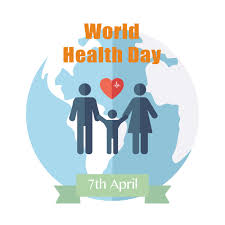
Today World Health Day is celebrated
World Health Day
From Wikipedia, the free encyclopedia
| World Health Day | |
|---|---|
 | |
| Observed by | All Member States of the World Health Organization |
| Date | 7 April |
| Next time | 7 April 2016 |
| Frequency | annual |
The World Health Day is a global health awareness day celebrated every year on 7 April, under the sponsorship of theWorld Health Organization (WHO).
In 1948, the WHO held the First World Health Assembly. The Assembly decided to celebrate 7 April of each year, with effect from 1950, as the World Health Day. The World Health Day is held to mark WHO's founding, and is seen as an opportunity by the organization to draw worldwide attention to a subject of major importance to global health each year.[1] The WHO organizes international, regional and local events on the Day related to a particular theme. World Health Day is acknowledged by various governments and non-governmental organizations with interests in public healthissues, who also organize activities and highlight their support in media reports, such as the Global Health Council.[2]
World Health Day is one of eight official global public health campaigns marked by WHO, along with World Tuberculosis Day, World Immunization Week, World Malaria Day, World No Tobacco Day, World Blood Donor Day, World Hepatitis Day, and World AIDS Day.[3]
Florence Nightingale "The Lady with the Lamp"
WOMEN'S
DAY
8-
march-2016
*****
*****
HEALTH'S DAY
7- april- 2016
Florence Nightingale
"The Lady with the Lamp"


Florence Nightingale was an important nurse that went to the Crimean War to nurse wounded soldiers. She and her nurses saved many lives and gave the nursery the importance it deserved.
When did she live?
Florence was born in 1820. This was ten years before Britain had its first steam passenger railway. She lived through the long reign of Queen Victoria. She died in 1910, after the age of electricity, cars and planes began.
What Florence Nightingale did
Florence Nightingale made hospitals cleaner places. She showed that trained nurses and clean hospitals helped sick people get better. She was the founder of modern nursing.
A rich family
Florence's father was William Nightingale, a rich banker. William and his wife Fanny went to Italy after they married in 1818. Florence was born in Italy on 12th May. She was named after the city of Florence.
Florence's sister
Florence had an older sister, Frances Parthenope (known as 'Pop'). Pop was born in Italy too. The girls had lessons from their father. Florence was clever, and liked history and maths.
What did most women do?
In Victorian Britain, poor women worked as servants or in factories Rich girls like Florence were expected to marry and look after a home, perhaps doing charity work.
Why Florence did not marry
Florence was very religious. From the age of 16 she believed God wanted her to do important work. When she was 22, a young writer asked her to marry him. After seven years making up her mind, Florence said no.
Florence gets her way
In 1851, Florence went to Germany, to a Christian nursing school for women. She learned nursing for three months. It was hard work, but she loved it.
First job in a hospital
In 1853 a rich friend asked Florence to run a London hospital for 'Invalid Gentlewomen'. There was no pay, but Mr Nightingale gave her money. She made lots of useful changes in the hospital. At home, when her father and sister became ill, Florence nursed them.
Florence goes to war
Florence and 38 nurses arrived in Turkey in November 1854.

The horrible hospital
The hospital was overcrowded and filthy. There were not enough beds, so men lay on the floor. They were not washed. There were no proper toilets. Drains were blocked. Rats ran everywhere. The smell was terrible.

Walking with her lamp
At night Florence walked around the wards to make sure the men were comfortable. She sat with dying soldiers. She wrote letters home for men who could not write. She carried a lantern, so the soldiers called her 'The Lady with the Lamp'.
At night Florence walked around the wards to make sure the men were comfortable. She sat with dying soldiers. She wrote letters home for men who could not write. She carried a lantern, so the soldiers called her 'The Lady with the Lamp'.
Home a heroine

 When Florence came home in 1856, people called her a heroine. Later Florence met Queen Victoria. She told the Queen what was wrong with Army hospitals. She wrote another important people in that time to solve the problem. Here on the right there is a letter from Florence Nightingale to the Duke of Westminster about the importance of nurses
The Army started training doctors. Hospitals got cleaner. Soldiers got better clothes and food.
In 1860 the Nightingale Training School for nurses was opened at St Thomas's Hospital in London.
Florence's book Notes for Nursing helped many student nurses.
Florence's last years
Florence worked so hard she became ill. For the last 40 years of her life she stayed in bed most of the time. But she went on writing letters, collecting facts and figures. In 1907 she was awarded The Order of Merit. She was the first woman to receive this honour. Florence Nightingale died on 13th August 1910.
In 1860 the Nightingale Training School for nurses was opened at St Thomas's Hospital in London.
Florence's book Notes for Nursing helped many student nurses.
Florence's last years
Florence worked so hard she became ill. For the last 40 years of her life she stayed in bed most of the time. But she went on writing letters, collecting facts and figures. In 1907 she was awarded The Order of Merit. She was the first woman to receive this honour. Florence Nightingale died on 13th August 1910.
Blanca Murillo Murillo. Biology teacher of Bilingual Section.
Friday, 1 April 2016
Local handcraft center and Town hall.
On March 17th, the tourism students, their teachers and I all went on an excursion through Trujillo to see the local handcraft center and the Town Hall. It was a fun trip, as we were able to see lots of local artisans' works at the center as well as a ceiling full of old families' coats of arms at the Town Hall. Trujillo has a lot of well-preserved buildings and walking through town was very enjoyable.
Kelsey Kemp, Language Assistant in IES TURGALIUM.


Wednesday, 30 March 2016
Saint Valentine's Day: 14th February 2016.
Saint Valentine's Day: 14th February 2016.
The bilingual students of the 3º year have made two human hearts with cardboard explaining the different parts, (chambers, valves, arteries and veins)) and the direction of blood inside the heart. Besides, knowledge about circulatory system has been reinforced using the blackboard of the class: a big heart has been drawn on it as well. Finally we put both cards on the wall.


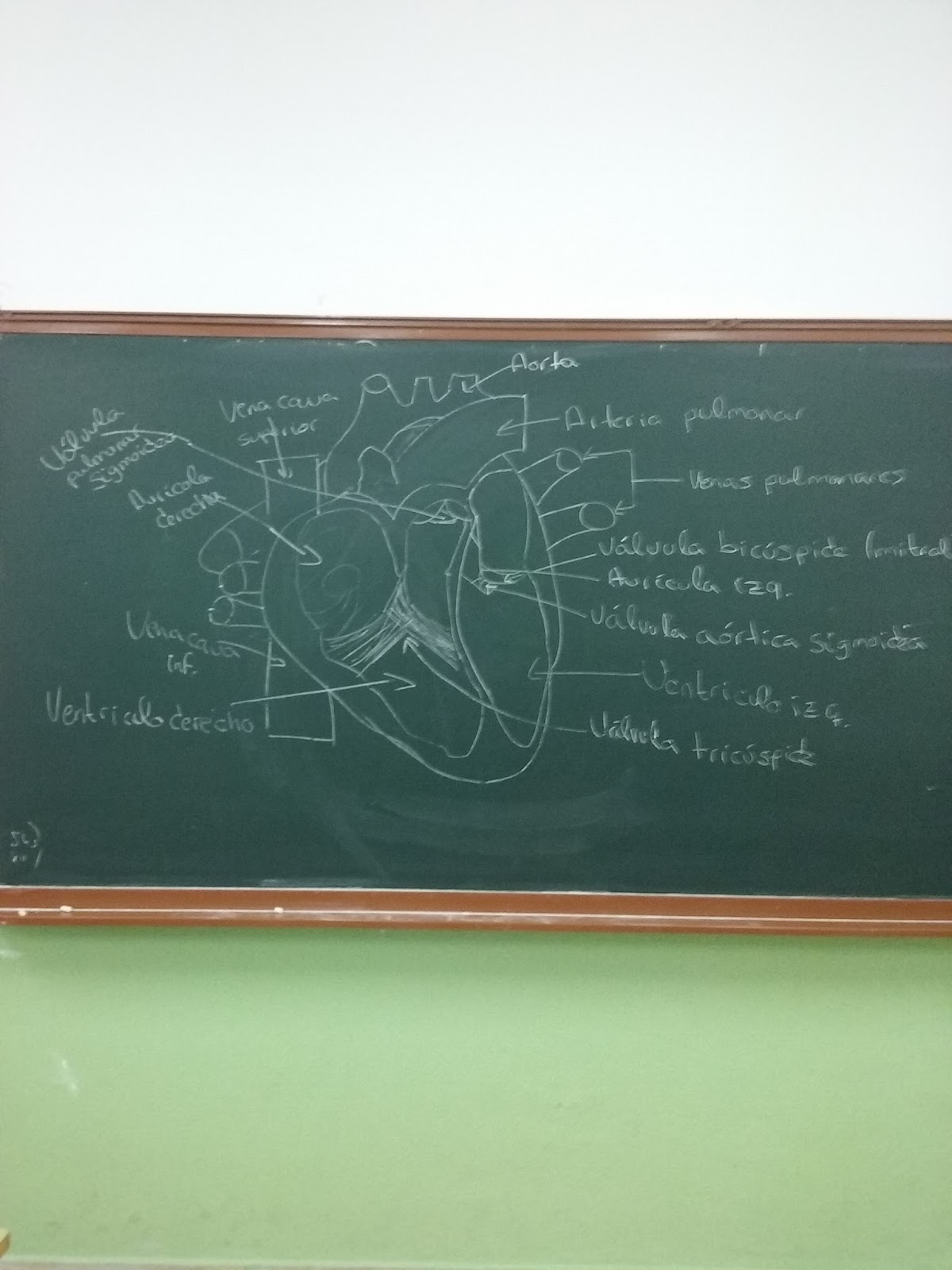


Blanca Murillo Murillo. Biology teacher.
Sunday, 20 March 2016
Describing Monuments
The
House of the Royal Weight of Chavez Cardenas
The house is located in the Main Square near the old
town hall, next to the palace of the Conquest and the Royal Prison.
I would like to explain this monument because it was a
very important building in the Middle Ages and it has a typical medieval architecture.
This building belonged to the Chávez-Cárdenas family
and it was built in the XVIth century. It is famous because it was
the ancient house of weight and the most common cereals were wheat, barley, corn
and so on.
The reason for its location is that the weekly market
took place in the Main Square.
Nowadays, we can’t find the original constructions
because in the XVIIth century it was modified.
The most representative architectural elements are:
two twisted solomonic columns capped with two gothic pinnacles. It also has
gothic Isabelline windows and a balcony with graceful corbels, that are typical
in the Moorish epoch.
It is believed that Felipe II slept in this house
instead of sleeping in the house of Chains.
Its interior cannot be visited, we can only admire the
façade.
Written by Almudena Ácedo
2nd
year student of Tourism Vocational Training


Wednesday, 16 March 2016
Saint Patrick's Day as an American Holiday
On March 17th, people all over the world will be celebrating St Patrick's Day. I'm not sure Irish people living in Ireland will appreciate their national day being described as an 'American holiday', but apart from that, this video gives a good overview of everybody's favourite green festival. For more St Patrick's Day resources, see below.
ALSO SEE
• Interactive Videos - St. Patrick's Day in Numbers• Video: Bet You Didn't Know - St. Patrick's Day
• St Patrick's Day resources• St Patrick's Day Infographic• St Patrick's Day Crossword• Ireland Crossword• St Patrick's Day LearnClick Quiz• St Patrick's Day Slideshare Quiz
LITERATURE: George Bernard Shaw Comic Strip
Click image to view full comic
George Bernard Shaw (1856-1950) was an Irish playwright. He wrote over 60 plays and is the only person to have received both a Nobel prize (for Literature) and an Academy Award (for Adapted Screenplay).
After deciding to become a writer, Shaw was supported financially by his mother and by the time he was 25, had completed three novels. But guess what? They were huge failures and no publishers bought them. Shaw found work as a music and theatre critic, while taking up playwriting in his spare time. His most well-known plays include Caesar and Cleopatra, Major Barbara, Man and Superman, Saint Joan and Pygmalion (which was turned into the musical My Fair Lady).
The quote used in the comic is taken from a lecture Shaw delivered titled Art and Public Money. Thanks to reader Gustavo for submitting the quote.
RELATED COMICS:
Theodore Roosevelt: The Man in the Arena
George Mallory: Because it’s There
Jack London: I’d Rather be Ashes Than Dust
George Bernard Shaw (1856-1950) was an Irish playwright. He wrote over 60 plays and is the only person to have received both a Nobel prize (for Literature) and an Academy Award (for Adapted Screenplay).
After deciding to become a writer, Shaw was supported financially by his mother and by the time he was 25, had completed three novels. But guess what? They were huge failures and no publishers bought them. Shaw found work as a music and theatre critic, while taking up playwriting in his spare time. His most well-known plays include Caesar and Cleopatra, Major Barbara, Man and Superman, Saint Joan and Pygmalion (which was turned into the musical My Fair Lady).
The quote used in the comic is taken from a lecture Shaw delivered titled Art and Public Money. Thanks to reader Gustavo for submitting the quote.
RELATED COMICS:
Theodore Roosevelt: The Man in the Arena
George Mallory: Because it’s There
Jack London: I’d Rather be Ashes Than Dust
Subscribe to:
Posts (Atom)